
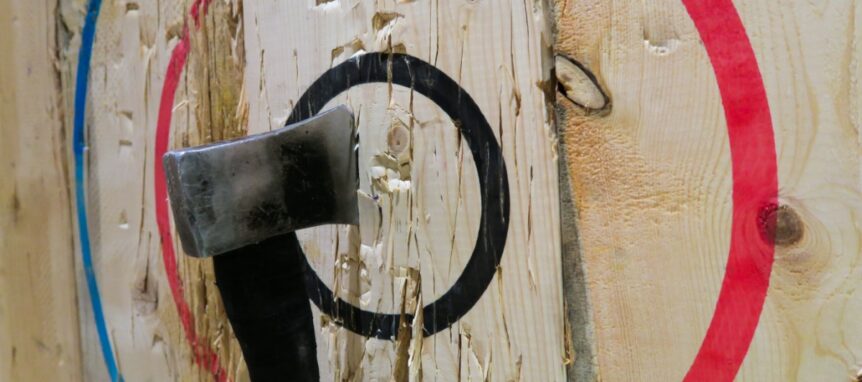
Axe throwing is often viewed as an exciting recreational activity that combines skill, competition, and fun. While the thrill of landing a bullseye is certainly a major part of its appeal, there’s much more happening behind the scenes. Every throw requires a combination of physical movement, mental focus, and precise timing, making axe throwing an excellent activity for improving hand-eye coordination and motor skills.
Whether you’re trying axe throwing for the first time or returning to sharpen your technique, each session provides an opportunity to develop abilities that can benefit you both inside and outside the throwing lane. Let’s take a closer look at how this unique activity helps strengthen coordination, control, and overall physical awareness.
Understanding Hand-Eye Coordination
Hand-eye coordination is the ability to process visual information and translate it into precise physical movement. It’s a skill we use every day, whether we’re driving a car, catching a ball, typing on a keyboard, or simply reaching for an object on a shelf.
When throwing an axe, your eyes identify the target while your brain calculates distance, speed, and direction. Your muscles then work together to execute the throw based on that information. This continuous connection between what you see and how your body responds is what makes axe throwing such an effective coordination-building activity.
Each throw provides immediate feedback. If the axe lands off-center or misses the target entirely, your brain begins making adjustments for the next attempt. Over time, this process strengthens the connection between visual perception and physical action.
Developing Fine Motor Skills
Motor skills refer to the movements and actions of muscles throughout the body. Fine motor skills involve smaller, more precise movements, particularly in the hands and fingers.
Axe throwing requires participants to maintain a consistent grip, control the release point, and adjust subtle movements throughout the throwing motion. Even small changes in hand positioning can significantly impact the flight of the axe.
As throwers practice, they become more aware of these details and learn how to make precise adjustments. This repeated refinement helps strengthen fine motor control and improves overall dexterity. The ability to consistently replicate a successful throw relies heavily on developing these precise movements.
Improving Gross Motor Skills
While fine motor skills play an important role, axe throwing also engages larger muscle groups and develops gross motor skills. Gross motor skills involve coordinated movements of the arms, shoulders, core, and legs.
A successful throw starts with proper body positioning. Throwers must maintain balance, engage their core, and coordinate multiple muscle groups simultaneously. The entire body works together to create a smooth, controlled motion.
Practicing these movements repeatedly improves body awareness, balance, and coordination. Over time, participants often find that their movements become more fluid and efficient as they gain confidence and experience.
Enhancing Focus and Reaction Time
Hand-eye coordination is closely tied to concentration. To consistently hit a target, participants must focus on a specific point and remain mentally engaged throughout the throwing process.
This level of concentration helps train the brain to process visual information more efficiently. The ability to quickly assess the target, make adjustments, and execute a throw improves reaction time and decision-making skills.
Many people are surprised by how mentally engaging axe throwing can be. Rather than simply relying on physical strength, success depends on careful observation and quick adjustments. This combination of physical and mental engagement makes it an excellent exercise for both the body and the mind.
Building Muscle Memory
One of the reasons experienced throwers appear so consistent is because they have developed strong muscle memory. Muscle memory occurs when repeated movements become automatic through practice.
Each time an axe is thrown, the brain records information about the movement. Over time, these movements become more natural and require less conscious effort. This allows throwers to focus more on accuracy and strategy rather than thinking about every step of the process.
Developing muscle memory not only improves performance in axe throwing but also demonstrates how repetition and practice can improve coordination in many other areas of life.
Strengthening Spatial Awareness
Axe throwing also helps improve spatial awareness, which is the ability to understand where your body is in relation to objects around you. Successful throwers learn to judge distances accurately and adjust their movements accordingly.
Determining the correct force, release point, and angle requires a strong sense of spatial awareness. With each throw, participants become better at understanding how their movements influence the path of the axe.
This skill translates into many everyday activities, from sports and recreation to routine tasks that require balance and coordination.
A Skill-Building Activity for All Ages
One of the greatest advantages of axe throwing is that people of various ages and skill levels can participate. Unlike some sports that require extensive training or athletic ability, axe throwing allows beginners to experience improvement relatively quickly.
The learning process is rewarding because participants can see measurable progress throughout a session. Landing a first successful throw, improving accuracy, or consistently hitting the target provides motivation to continue practicing and developing new skills.
Families, groups of friends, and coworkers can all enjoy the challenge while building coordination and confidence at the same time.
Why Practice Makes Progress
Like any skill-based activity, improvement comes through repetition. Each throw provides valuable feedback that helps refine technique and strengthen coordination. Small adjustments gradually lead to noticeable progress, making the experience both challenging and rewarding.
The more often participants throw, the more comfortable they become with the mechanics of the activity. This ongoing development keeps the experience engaging while providing physical and mental benefits along the way.
Sharpen Your Skills at Axe Niagara
Axe throwing is much more than a fun activity, it’s an engaging way to improve hand-eye coordination, develop motor skills, and strengthen focus. Every throw challenges the body and mind to work together, creating a rewarding experience that combines skill development with excitement. At Axe Niagara, guests can enjoy a safe and welcoming environment while practicing their technique with high-quality real metal hatchets and a modern lumberjack analytics system that tracks performance. Whether you’re a first-time thrower or looking to refine your skills, contact Axe Niagara and discover how rewarding the sport of axe throwing can be.